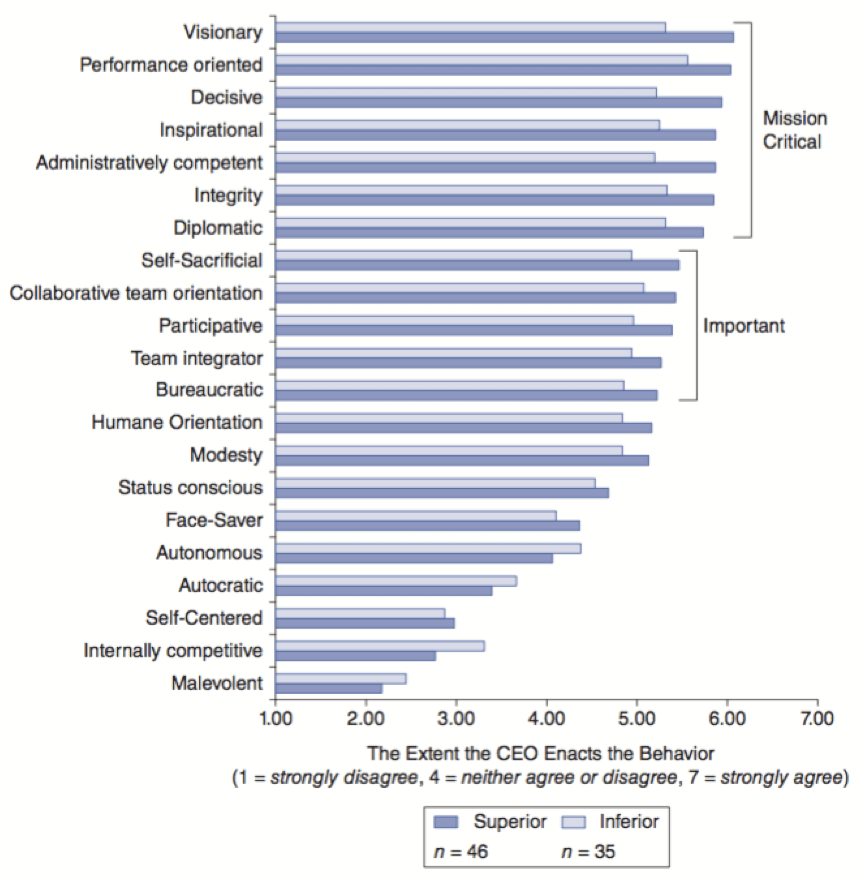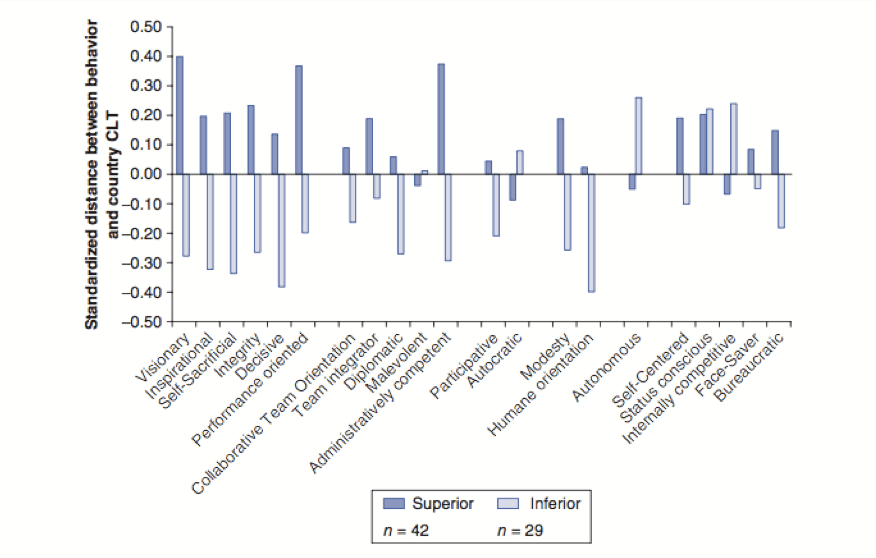
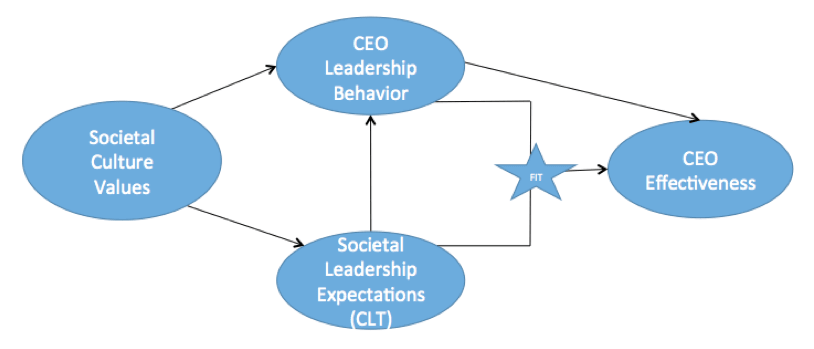
GLOBE researchers were interested in how a society’s culture influences leadership behaviors expected in that culture and whether leadership success depends on a CEO matching his/her leadership style to these societal expectations. To answer this question as well as many others, more than 70 GLOBE researchers collected data from over 1,000 CEOs and over 5,000 senior executives in corporations in a variety of industries in 24 countries. Our findings reinforce the importance of CEOs to organizational outcomes, the considerable influence of culture on societal leadership expectations, and the importance of matching CEO behaviors to the leadership expectations within each society. This massive GLOBE study provides convincing evidence as to which leadership behaviors are likely to be most successful and which should be avoided.
Almost 70 researchers collected data from over 1,000 CEOs and over 5,000 senior executives in corporations in a variety of industries in 24 countries. This sample of countries represents cultures in almost all cultural regions of the world. The goal was to have a minimum of 40 CEOs from each country which were selected from a wide variety of industries. For the quantitative (i.e., research survey) portion of the study, each CEO was required to have between six and nine TMT members reporting to him/her. In addition to employing survey research with its quantitative emphasis, qualitative methods were employed where each team of multinational researchers held personal interviews with CEOs in their respective countries.
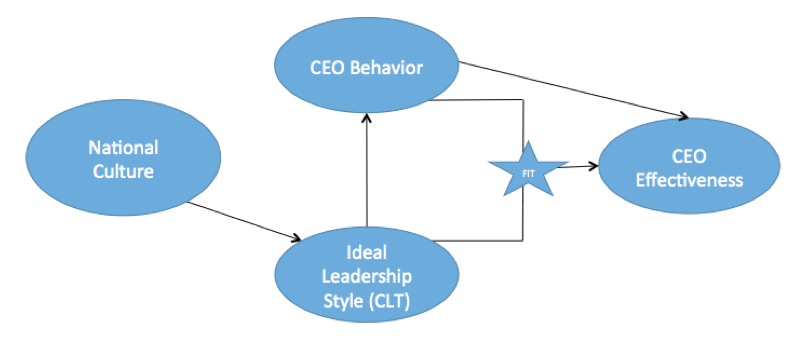
The second GLOBE objective was to determine the extent to which CEO leadership behavior leads to effective TMT teams and organizational success across the participating societies. The GLOBE executive leadership behaviors were created at two levels: 6 global leadership behaviors and 21 primary leadership behaviors that combine to make the six global leadership behaviors. (Leadership behaviors for this study are found in Appendix B of the 2014 book and reproduced here). A few of the findings include the following: Among the six global dimensions of CEO leadership behavior, Charismatic leadership behavior is consistently the most impactful leadership behavior regarding TMT Dedication and Firm Performance. CEO Team-Oriented behavior is the next most important global leadership behavior followed by Humane-Oriented leadership. Participative leadership is moderately related to TMT Dedication but not Firm Performance. Autonomous and Self-Protective leadership are generally ineffective.
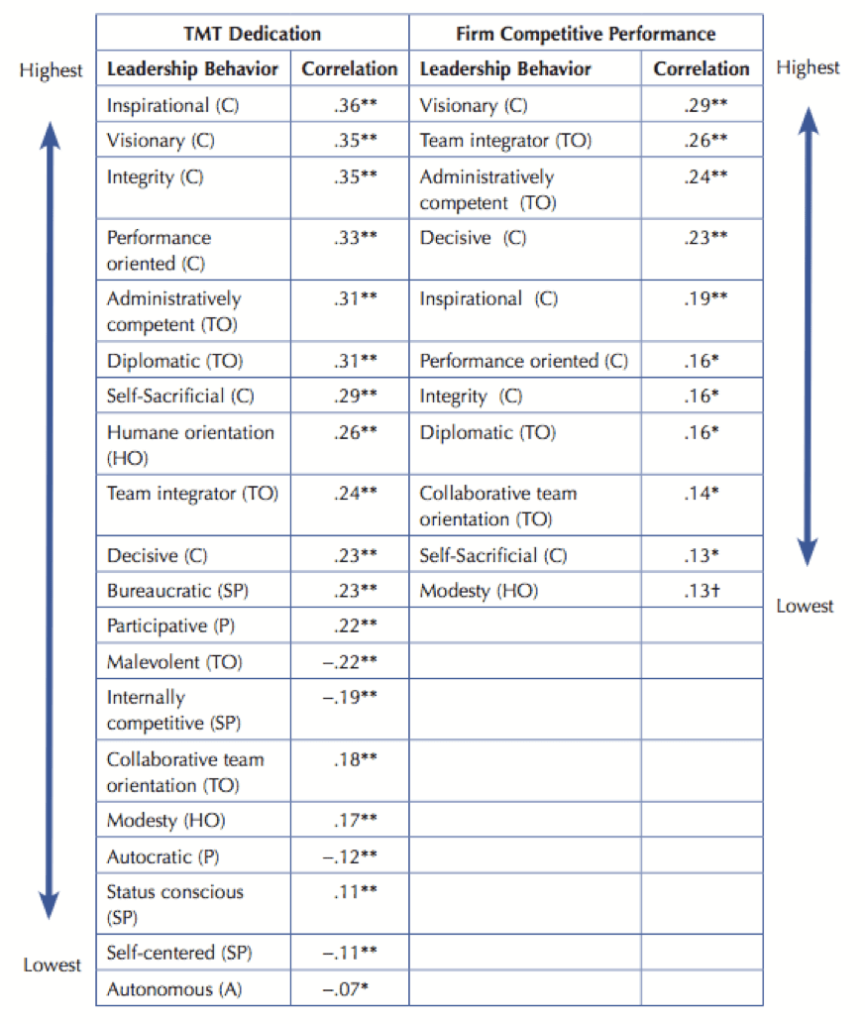
Table 11.2 (right) shows how each of the significant primary leader behaviors impact Top Management Team Dedication (TMT Dedication) and Firm Competitive Performance. For example, notice that all six of the primary dimensions of Charismatic leadership are important—in particular, the most influential primary behaviors are visionary, inspirational, integrity, and performance-oriented leadership. Perhaps unexpectedly, administrative competence also proved to be quite significant in impacting both TMT Dedication and Firm Performance.